


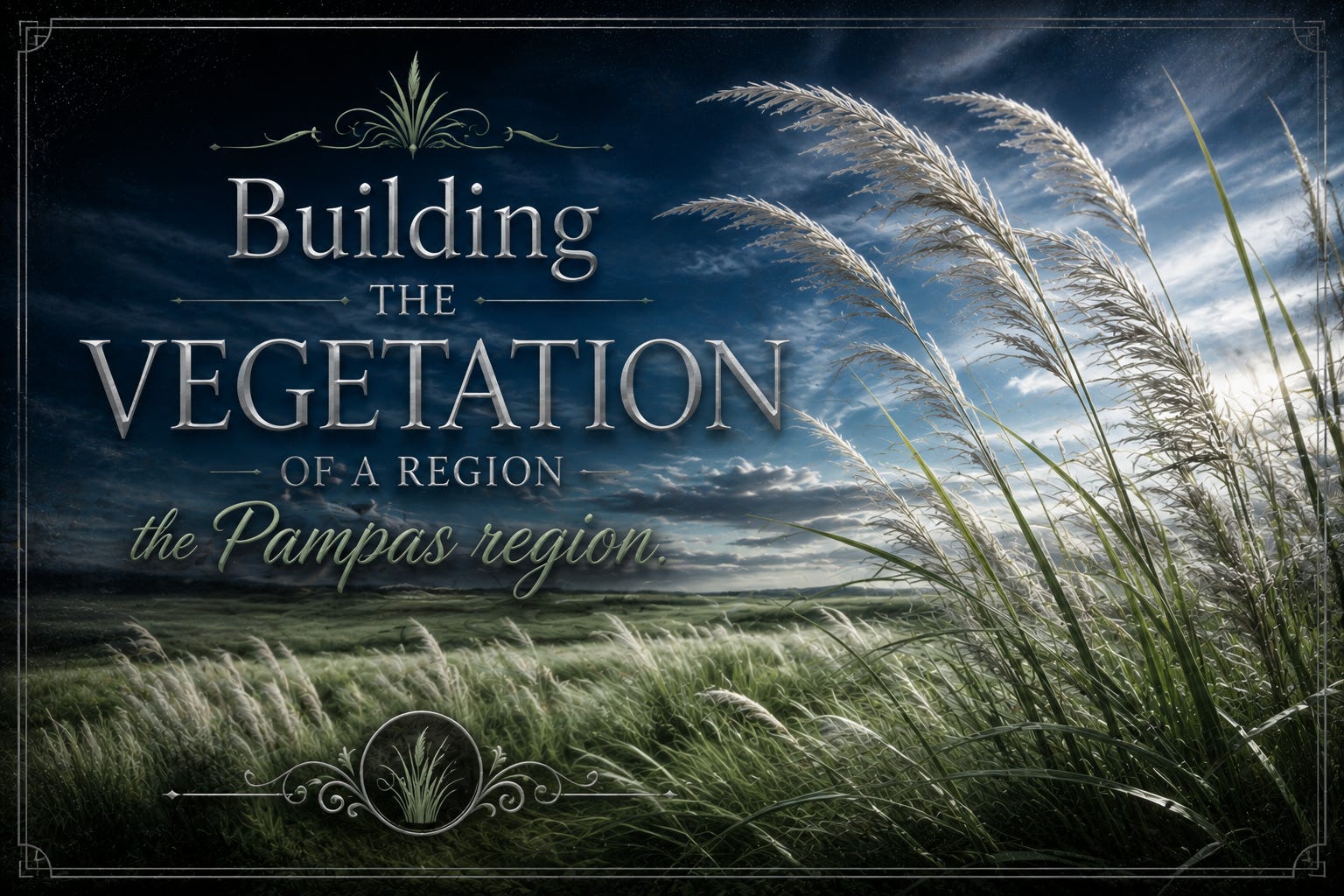
Today’s Inking Erudus, is different. I need to build the vegetation for the planet, so taking into consideration where the site is located, I tried to come up with plants. Below, I describe them.
Where is Erudus located and why would that affect plants life?
Erudus is located on the edge of the Milky Way by a lone sun. The nights are darker because the stars are further apart. It is colder here.
Because the planet is located so far from stars, other than its own, the environment is colder, and the surrounding light is bluer than on Earth. Radiation is harsher here and plants have to be tough to survive. The harsh wind and poor soils also affect how the plants evolve and grows.
Region - Pampas (Prairie Region)
Vegetation in the Pampas region survives in a warmer, but still windy, climate. Periods of drought, across the expansive, rolling fields, occur seasonally.
Plants have adapted to recover quickly both from drought, and from heavy storms.
The landscape is constantly in motion as plants sway in the wind. The silver-yellow color of the fields is unique on Erudus, and before distrust began between the cultures,. the Pampas region was a tourist destination.
In some instances, the plants have adapted to resonate in the wind creating sound that travels far into the distance.
Flare Grass
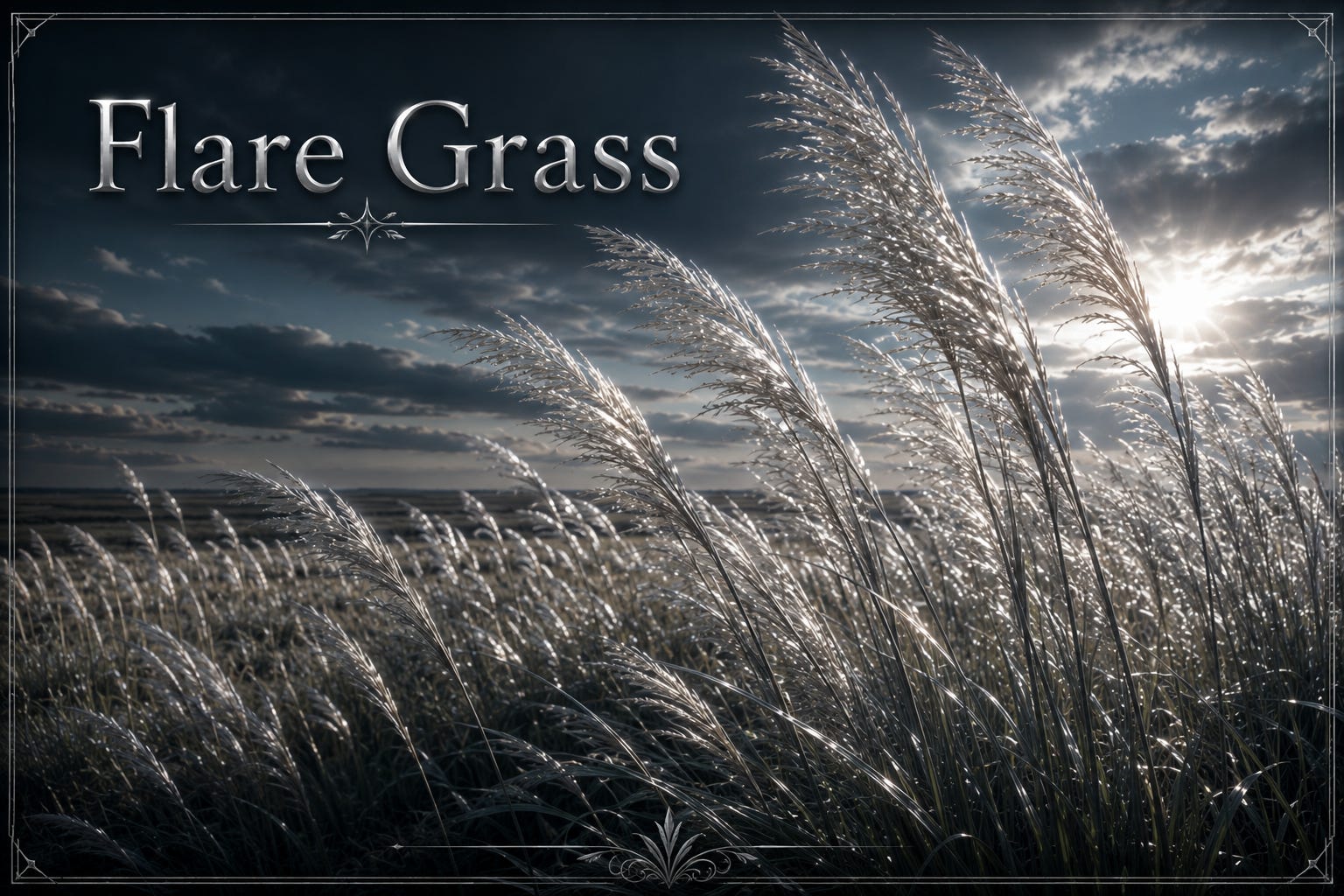
Flare grass in the pampas region grows very tall. Although a period of drought kills the grasses, and they must regrow from their roots, the grass grows so tall, that a grown man, can be hidden by the grass.
Leaves grow thickly together. Each strand has silver with yellow variations. When the leaves sway together, a soft whispering melody is created. At the end of intense wind storms, the stocks are bent down to the ground. It only takes a moon cycle for the grass to rise again.
On intensely windy days, some people will sit outside their homes to hear the sound that the grasses make.
Ribbon Leaf Shrub
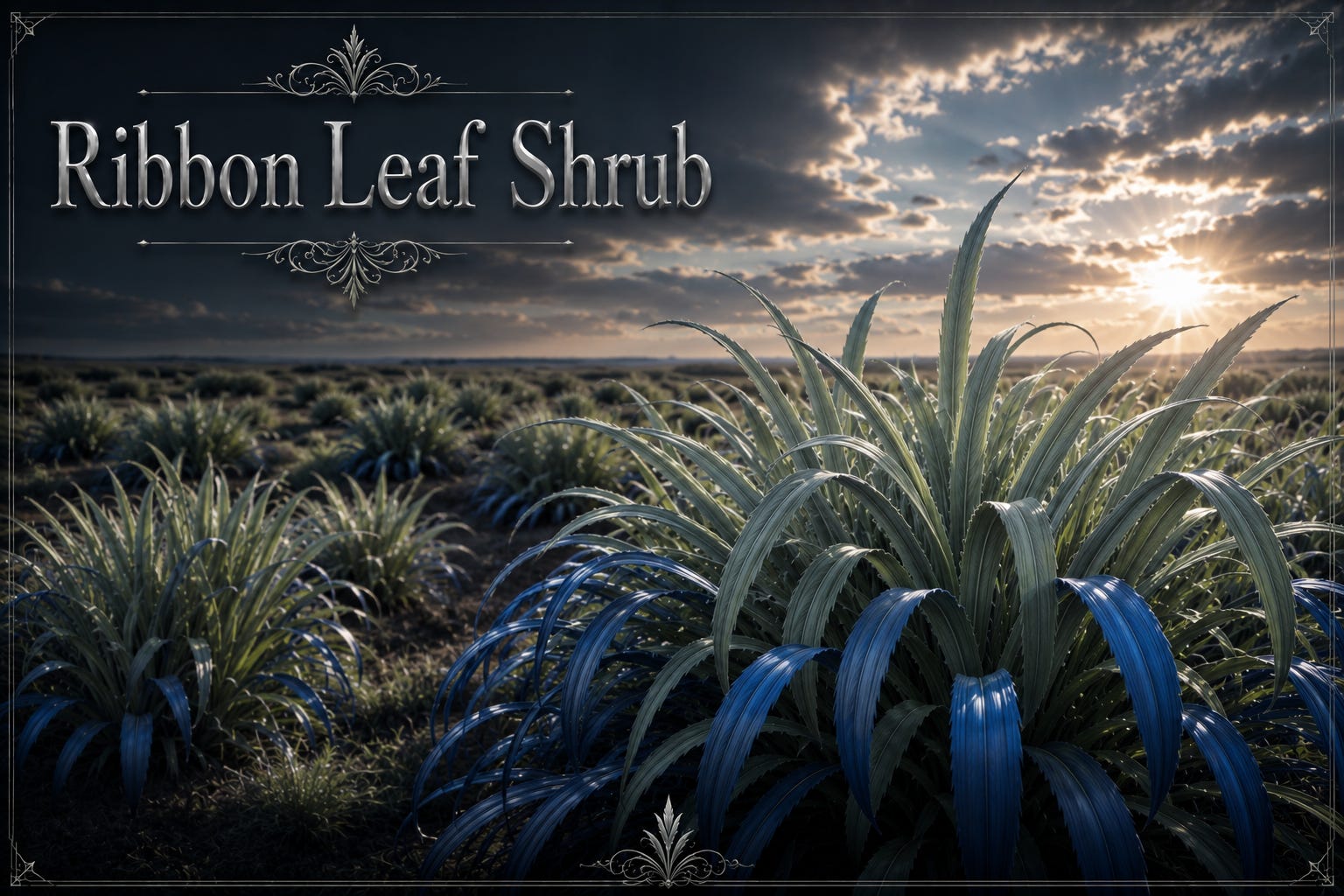
In some regions of the Pampas, shrubs grow in large expanses on the rolling hills. These shrubs are sage green with pewter lines on their skinny leaves. When the sun becomes too warm, the leaves turn downward, showing a cobalt underside. This area gathers the beams of the sun, storing energy, and cooling the plants roots.
During storms the shrubs drop their leaves so that its surface area is limited. Once the storms pass, small buds grow very quickly. Over night, the leaves reappear on the shrubs.
The ribbon leaf shrub is very important to the people of the Pampas. Because, the branches are tougher than wood. They are cut with a special tool, and then woven into mats, beds, and fencing.. The bark that is stripped from the Pampas is soaked in hot water to make a medicine for intestinal cramps.
Burnished Podlets
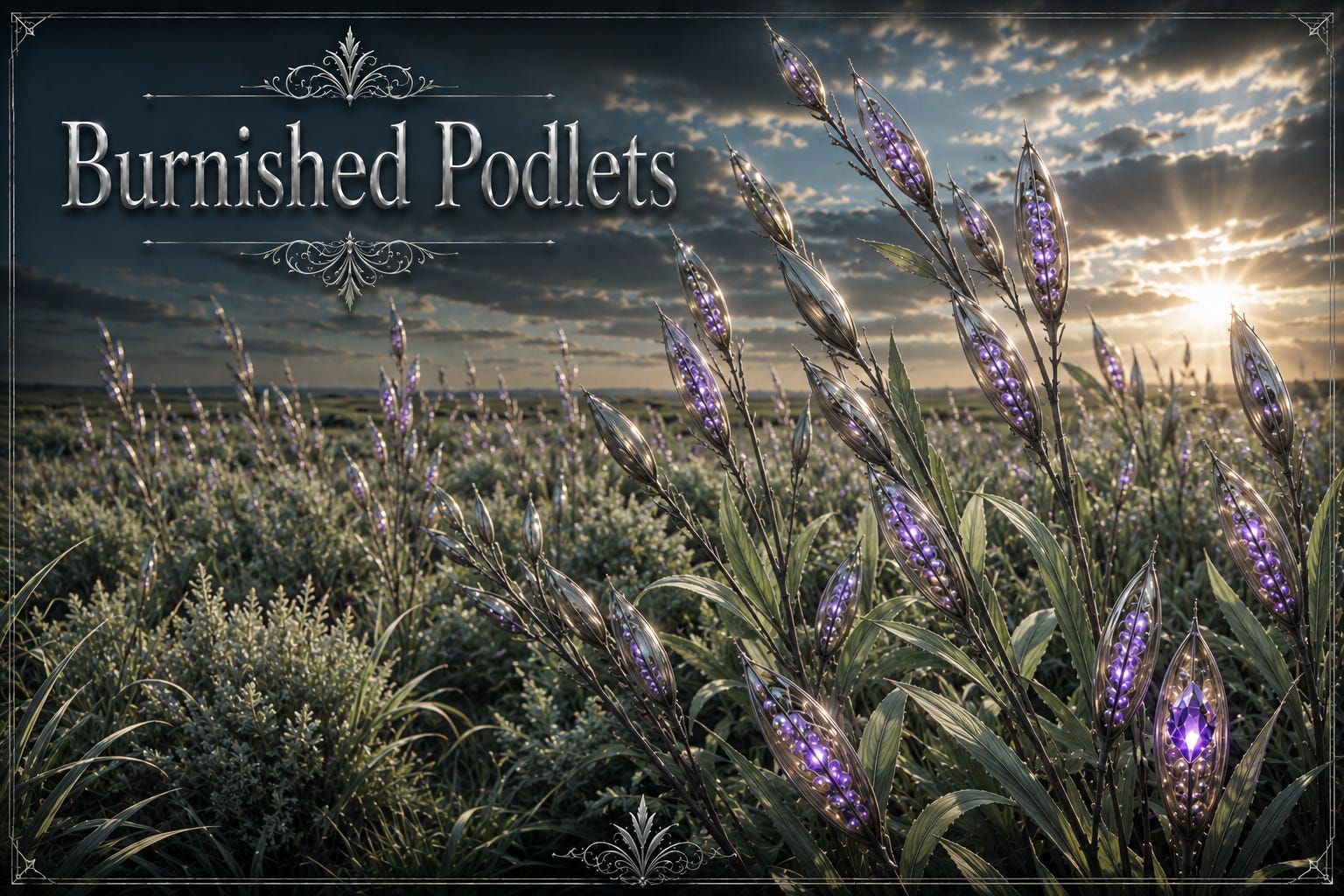
Long stalk like plants that resemble grass, but twice during the year produce seeds (podlets), that glow in the dark. Immature podlets glow silver. After two weeks of ripening they glow an iredescent purple.
The glowing podlets when waving in the wind, look like spirits flying in the night from afar, so they tend to be avoided. Those who are brave enough to gather the podlets as they sway have the opportunity to find a Gilern. Gilerns are small jewels that grow in random Gilerns. They are created when bugs pollinate the plant, and it is hit by lightening. In most cases, Burnished Podlets will die in these conditions, but if the plant has reached a certain stage of maturity, Gilerns are possible.
Gilerns are very rare, are hungrily sought after, and very expensive. It is rumored, that gems are almost as tough as the great jewels faceted by the dwarf kingdom on the planet Jupanier. They are as beautiful as Jupanier gems, but Gilerns only last one hundred years, and do not last for centuries like the Jupaniers.
Tappyroot Trees
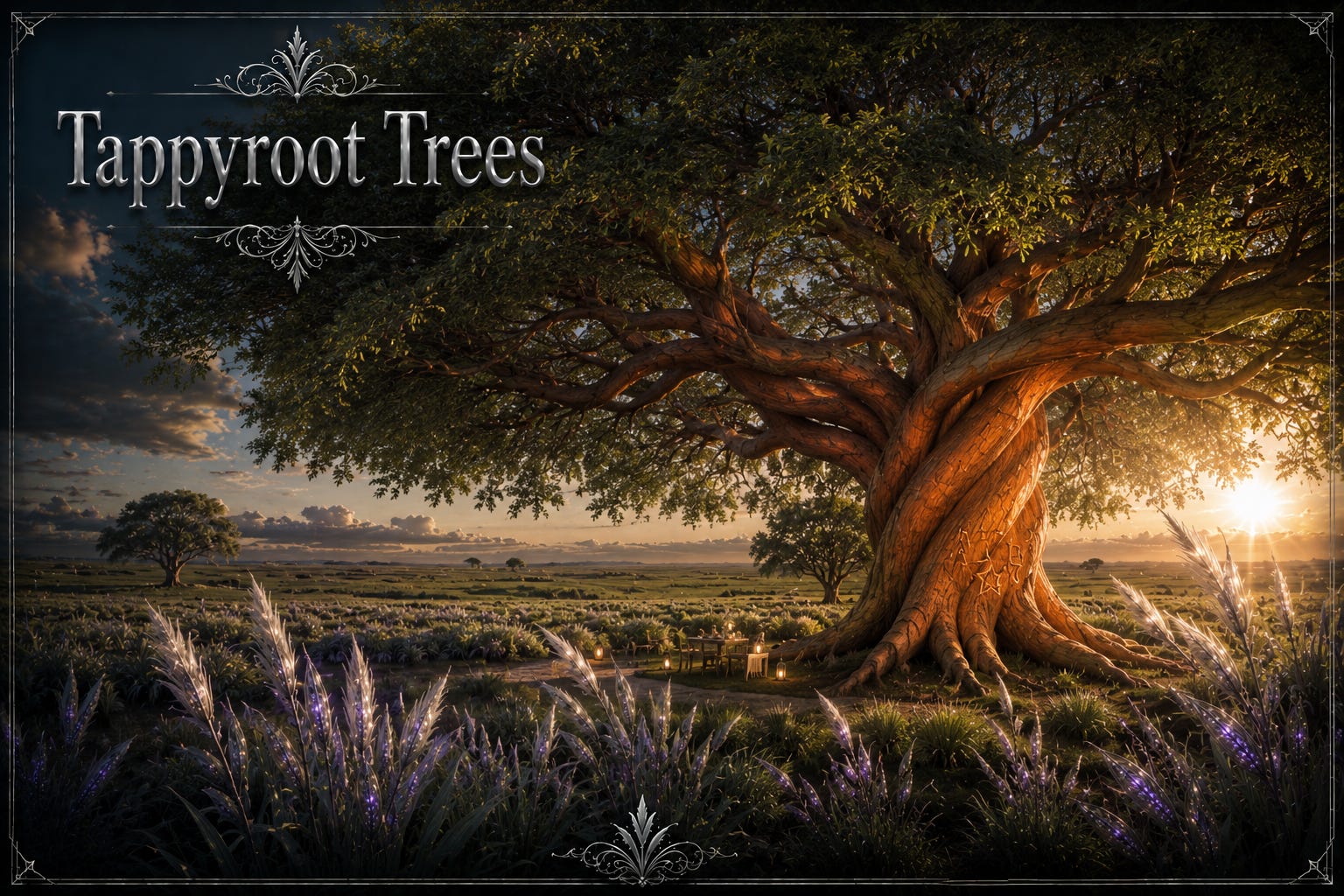
Tappyroot trees are massive trees that grow occasionally on the Pampas. They have taproots, that spread so extensively, that a Pampasian can walk all morning over the roots of one tree.
The massive roots break up the soil across the pampas, This helps to aerate the poor soil. making the landscape habitable, for smaller plants.
The tree has a large canopy that leads to a twisty trunk. The leaves are long and spike-like, and when the wind blows, they sway and chime. These chimes can be heard from far away.
The bark is deep orange in warmer times of the year, but will turn dark grey in the cold months.
The tappyroot tree is important in the rituals on Erudus. Since the tree is ancient. it has become customary, that after a couple decides to join, that they go to a specific tree in the middle of the pampas, and carve their initials and a small star in it. The Pampasians believe that this ritual help to ensure they will have have long, wonderful lives together.
Family gatherings are often held under the closest Tappyroot tree.
Loosey Buds
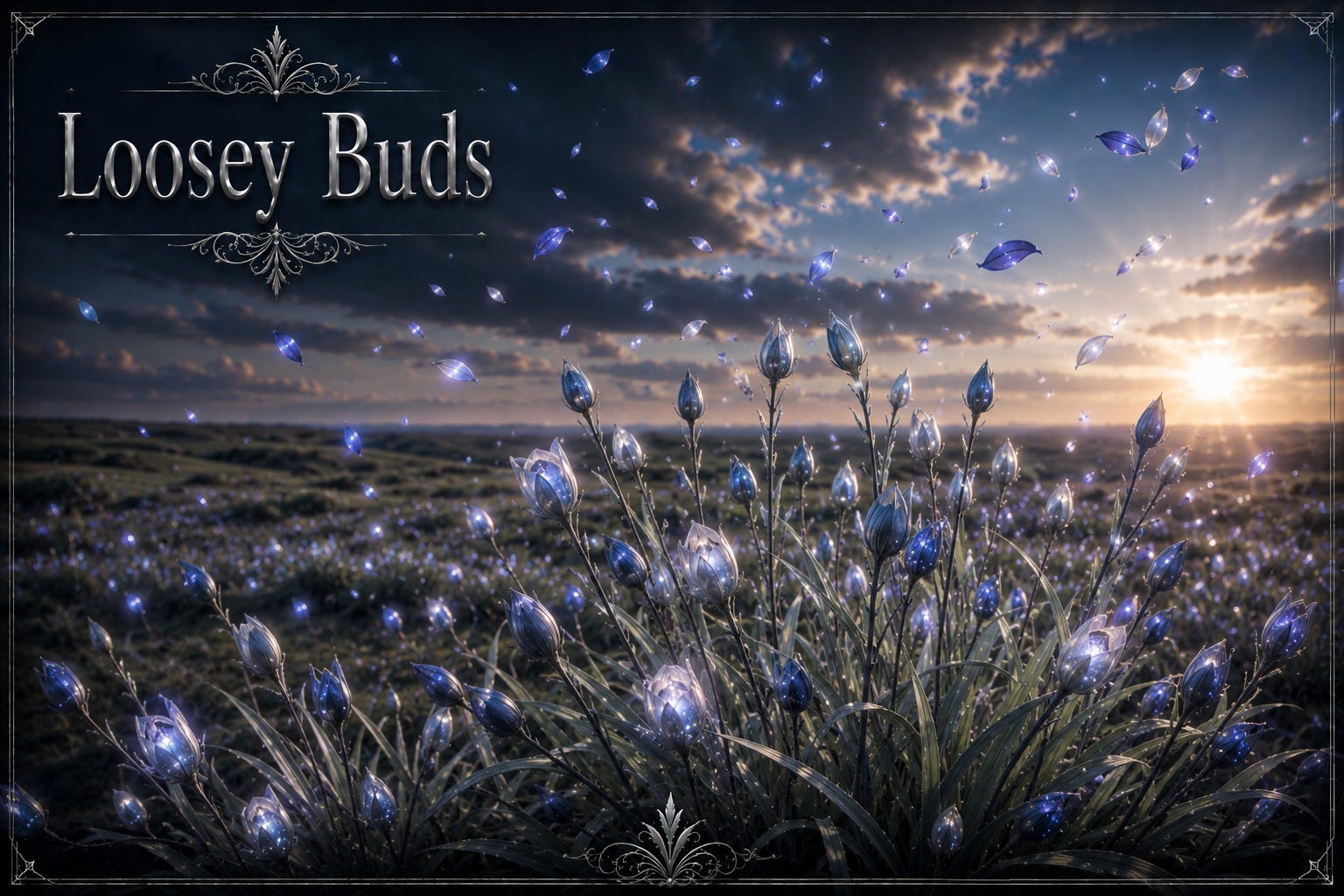
This flower lays dormant on the pampas until heavy rains occur. Once the water soaks into the ground, flower buds form, and blossoms open in cobalt blue and silver. The blooms last overnight, then drop their petals into the wind, where they drift across the pampas.
In some places, the petals glitter in the wind putting on a show for the locals.

Other posts discussing the vegetation on Erudus.
Next Week
An introduction to the plants of the Fabled Woodland on Erudus.
Thanks for reading Spunky and Spellbound in the Snow! Subscribe for free to receive new posts and support my work.
Good-bye for now. Have a lovely weekend everyone.